The first thing that jumps out about The Three Musketeers is how fun and sunny it is. I guess I start most classic books with the prejudice that I'm in for a serious undertaking. Why I picked The Three Musketeers I don't really know, except that it was just published in an attractive new edition translated by Richard Pevear (more on him in a second) and that never having read anything by Alexandre Dumas, I might as well roll the dice.
Then it starts and immediately I was immersed, as entertained by the book as any escapist bestseller or beach read. This is a book about young men who fight, gamble and chase skirts (long frilly skirts with lace and jewels, but skirts). Basically, a young man who hasn't hit twenty leaves the provinces for Paris, hoping for military fame. He falls in with the Three Musketeers, who are in their late 20s and early 30s. Originally the musketeers and D'Artagnan plan to kill each other, until the musketeers are impressed by his bravado and decide to adopt him as a protege.
Then it's 600 pages of dueling, chasing and scheming. There are villains and royals and young men who can't decide whether they want to pork the pretty, innocent servant or the polished, beautiful royal. Villains get stabbed, good guys spend time in jail, butlers save the day and everyone celebrates by getting drunk and rebelling against authority.
It's been a long time since I've read a book that has so much pure fun. The translator, Richard Pevear, turns out one great edition after another. I thought I didn't like Russian literature until I read a translation of The Brothers Karamazov that he and his wife published. They could make a cereal box label seem dramatic and exciting.
I decided that in 2008 I'm only going to read books that were written before I was born. I read too much middle-of-the-road junk. Books by new young writers that receive strong reviews but are usually just pleasant or minor. Plus, I have a whole shelf of books with titles like America Betrayed! Bush, Cheney, Iraq, Evangelical Christians and the Beshitting of the Constitution. (I made that up, but the real titles are pretty close.) It seemed time to pursue some new interests.
Whenever someone tells me that I need to read Harry Potter, I tell them that I'm sure he's fine but that I don't want to invest myself in thousands of pages when there are a lot of great books I haven't read. Maybe this should apply to new books by David Mitchell and Richard Ford too. At least in 2008.
I haven't read any Harry Potter, but I'm pretty sure that The Three Musketeers is more fun.
Instead of some "10 Best" list, which I hate, here are a few concluding reviews and arguments. The theme to all of this is, "Christ, I'm a fucking cliche."
Favorite Album: I'm Not There Soundtrack
This is an album of cover songs. The Byrds and Hendrix showed that Dylan was meant to be covered. This album is better than The Byrds and Hendrix. It is the best collection of Dylan covers ever.
It's a testament that you can hear a song for literally the five-hundredth time and the experience is as thrilling as it was sophomore year of high school when Highway 61 played on tapes played in friends' basements. Special highlights include the Sonic Youth cover of the title track, the Richie Havens cover of "Tombstone Blues" and the Cat Power cover of "Stuck Inside of Mobile with the Memphis Blues Again," a Jack Johnson (!) cover of "Mama You've Been On My Mind," The Hold Steady covering "Can You Please Crawl Out My Window" (they take an obscure song, add some "Positively 4th Street," and it still sounds like they cooked it on their own.) Aside from fairly unimaginative tracks from Stephen Malkmus and Calexico (which aren't bad, just easy) the entire album is stunning.
This soundtrack and Dylan's Chronicles memoir make it clearer than ever that Dylan is America's gift to 20th century culture. Someday, Faulkner and Louis Armstrong will be the territory of specialists (they probably are already) but every generation will rediscover Dylan and adopt him.
The Album to Love Most After 10 Listens: The New Pornographers, Challengers
Skim the ebullience from their three preceding albums, and the product is starker and simpler, a kind of musical hug, Simon & Garfunkel's harmonizing without the treacle. It took awhile to sink in. The first few times I felt empty-handed, but once the expectations readjusted, it seemed clear that this is the Pornographers' best, most rewarding album, even if it's not the rowdiest.
The Album that Couldn't Be Loved: Wilco, Sky Blue Sky
It's a glass of room-temperature water that sat on the bedstand all night. It's a plate of scrambled eggs that's too undercooked and too close to room temperature. Tepid, bland, and unmemorable. That's okay, though. Good artists get to fail, and when they do, it reminds you of the parts you like about them so much in the first place.
Elder Statesman Who Hit His Peak: Bruce Springsteen, Magic
I get it, and the enthusiasm hasn't weakened as the weeks pass by. This was a very good album. Maturity has its privileges.
The 2006 Album that I Found in 2007, When it Proceeded to Monopolize my iPod: The Thermals, The Body, the Blood, the Machine
It's the violence and fright of Children of Men set to music, and made angrier. This album fucks you up. It's got the rage of Rage Against the Machine made catchier. So I like it. Technically it shouldn't count because it came out in 2006, but I found it this year and I get to set the rules. The album is something about teenage rebellion against an imagined Christian-fascist state, and a certain numbness that goes away as our protagonists flee.
I also found out that I really like the Cold War Kids, even though their album was 2006 as well. The band name was an initial turn-off, I think.
Second-Favorite Concert of 2007: Wilco, Hammerstein Ballroom
Even Sky Blue Sky sounded good when they played it live. What I wrote then:
[T]here's sometimes this sense of smugness in the band's product, that Jeff Tweedy, while not tweedy, kind of thinks he's the smartest guy in the room. It's almost like he overthinks. He never lets loose with the kind of passion you hear in Neil's "Powderfinger," or in "Like a Rolling Stone" or in "Sway." The blue, you see, is sky blue, never subterranean-homesick or tangled up. Sometimes precision is a shame.
The caution of this band's albums -- as good as they are -- doesn't show when it plays live. They know how to guide a crowd, and the undercurrent of stately adornment fades. So "Heavy Metal Drummer" feels like more of a celebration, and "Spiders (Kidsmoke)" is just a kick-ass song, and the blue tangles up just enough to position passion ahead of perfection.
Favorite Concert of 2007: Arcade Fire, Radio City Music Hall
I'm not into handicapping shit like this, but after seeing Arcade Fire at Radio City and Randall's Island, I think they're going to be as big as U2 in a few years. They can own a massive space. They sing serious songs but remain accessible. I liked Neon Bible (Jeff, we disagree) but never felt much for the band until I saw them live. The Radio City show had moments of anarchy and chaos -- Win Butler openly encouraging people to defy security and rush the stage, projectiles flying through the whole show, pyrotechnics and a screaming crowd, in a spectacular venue that usually doesn't see such antics. It was everything a show is supposed to be. If this sounds gimmicky or stage-managed, it wasn't.
2007 was a year of great live shows. There wasn't a single show where I shuffled my feet, glanced at my watch, and wanted the encore to wrap so that I could head home. Highlights included The New Pornographers at Irving Plaza, Spoon at Bowery Ballroom and Neil Young at United Palace. Only The White Stripes show at the Garden left a little to be desired, but it hardly qualified as a low point.
Favorite Book of 2007: Tree of Smoke, by Denis Johnson
But then sometimes the hype is right, and this was one of those times. There was a huge, ambitious book, with big themes and plots, and in the final pages a series of payoffs that made the whole exercise worth it. There was no slight of hand or gimmickry. This is the best big novel in the past 10 or 15 years -- more coherent and disciplined than Underworld, and up there with American Pastoral, Atonement and Never Let Me Go as the greatest piece of accessible literary fiction published in my adult lifetime. (How heavily qualified was that?)
I must have re-read the book's strange opening passage about four times before I really dug in. It started back in September, when I bought the book in Ann Arbor and then went to Ashley's to smoke cigarettes, drink beer and read the first sixty pages. I closed the book and put it aside -- great stuff, and I was not prepared. Along the way, I read Johnson's Jesus' Son and pecked at The Name of the World, both of which are fine but not in the same class as Tree of Smoke. When I revisited the book in December, I cut through its 614 pages in about 96 hours, taking notes and drawing lines between names and dates in the book's end pages, holding the book close to my eyes and doing my best to track every character and element in smudged, penciled-in notes.
It's war fiction. It's about mythology -- Buddhism, Catholicism, Confucianism and local practices in the Philippines and Southeast Asia. It is about underground tunnels and obsessions. Like all post-Classical war stories, it is about corruption and our heroes' ruin. It is deeper, bolder, more expansive than Johnson's claustrophobic drug horrors in Jesus' Son.
Denis Johnson is a helluva writer. His sentences are rich and vivid but never intrude. I can't recall a book with better prose. You, the reader, are never turned off by a feeling that he is trying too hard to dazzle. The book is loaded with paragraphs as good as this one:
Through the doorway of a tavern -- a couple of sad-drunk infantrymen dancing in the jukebox glow, each alone, chins down, fingers popping, shoulders working, heads bobbing, trudging like carriage horses toward some solitary destiny. She stopped to watch them. In the songs on jukeboxes or on radios tuned to AFVN she often heard God calling out to her -- "Love me with all your heart" -- "This guy's in love with you" -- "All you need is love" -- but tonight the voice sang only to soldiers, and its message didn't reach the street.
Tree of Smoke, p. 309. If there's another book with such great language, show me the way.
The Two Books that Idiot Critics Underrated: Exit Ghost and Falling Man
It's fun to tear down idols. I get it. Philip Roth got away with Everyman so it was time to pull out the knives. He started the book by talking about prostates and most of you couldn't overcome that. So you shut down, got lazy, and barely bothered to read the rest. Your loss.
The Falling Man response was much shoddier, because somehow you couldn't get it out of your feeble little minds that the guy didn't throw in a bunch of clever know-it-all tricks. He wrote a straightforward story. He nailed it. Eerie, funny, sad, scary, smart and credible -- probably the best thing that he's written since White Noise.
Least satisfying book of 2007: The Brief Wonderful Life of Oscar Wao, by Junot Diaz
It was fine, but it's now about Exhibit G of the CrimeNotes Thesis: With the exception of Zadie Smith or Mark Z. Danielewski, overpraising young writers screws both the writers and their readers, leaving you feeling empty when a novel is merely good and not a masterpiece, thus leaving you the reader unnecessarily wary of buying future books because the critics set the stage for a let-down when it didn't need to be that way. See also J.S. Foer, Marisha Pessl, Nell Freudenberger, Benjamin Kunkel.
Unless they've written the new V. (actually written V., not something merely decent that makes the reviewer pine for V.) a rave review for a first novel should be no more enthusiastic than: "This is a strong debut that shows much promise. The young novelist did some things well, and if the book was uneven, it was less uneven than most."
This is fine. F. Scott Fitzgerald's first novel pretty sucked; Junot Diaz's first novel is better than This Side of Paradise. Let him be.
Book that changed my fucking life in 2007: The Shock Doctrine, by Naomi Klein
A very scary book that begins with CIA experiments in brainwashing, then charts the rise of neo-liberal economics at the University of Chicago, following how psychological warfare in Latin America led to radical economic restructuring at the behest of American corporate interests and intellectuals who treated nations as their petri dishes for radical theories.
The Shock Doctrine is a secret history of geopolitics since World War II. Klein's principal leap -- that sensory-deprivation techniques used on an individual level translate into entire nations traumatized by coups and turmoil -- isn't quite persuasive. She just didn't have the social science to back this up her major thesis. But this is a less damning criticism than it should be. Her account of the bonds between radicals in academia, government and corporations is the real revelation, thoroughly persuasive, and more frightening than any conspiracy theory Oliver Stone conjured. Think tanks ad faculties make for unlikely villains, and then she turns to Chile.
Plus, the book has a fucking trailer produced by Alfonso Cuaron:
Best movie of 2007: No Country for Old Men
Actually, this is the only new release I saw in 2007, so it's the only eligible entry. Going to movies in New York sucks. It's like hanging out in an airport -- tons of lines, confusion at ticket kiosks, frustrated patrons, too much advance planning, and passive-aggressive seat jockeying. I hate it. If you spontaneously decide to go to a movie on a Sunday afternoon, God help you, sir.
As to the movie itself -- pretty good. Great work by Javier Bardem and Kelly MacDonald, every other performance is credible, it's engrossing throughout, the photography was good even if the geography made it easy, and then you get to the end and it all felt a little empty. I love the Coen Brothers and Cormac McCarthy and therefore expected one of the greatest things of my life. It asn't as good as Fargo, Blood Simple, Barton Fink or Miller's Crossing, but better than anything they've done in 10 years. (I don't understand the Big Lebowski cult.)
I also saw Knocked Up on-demand and judge it the most overrated movie of 2007. There was one funny scene involving a bouncer. That was it. It was a comedy for pro-life frat boys who support Mike Huckabee and desperate single girls who want babies. I told someone this and got yelled at, and was duly informed that not all Democrats want abortions.
Whatever. If Seth Rogan's character knocked up Giselle, she would've made a quick run to the clinic. Giselle had that baby because she wanted Tom Brady's genes, and now he's trapped. We live in a cynical world -- the Tom Bradys and CrimeNoteses of the world could auction their semen at Sotheby's, but Seth Rogan would be stuck with crackwhores. In real life, the chick in that movie never would have carried the baby of a fat loser Canadian with no viable income, and none of us would have held that against her. 40-Year-Old Virgin: brilliant. Knocked Up: unfunny, right-wing fantasy for losers.
Falling Man, by Don DeLillo. Don DeLillo reminds me of Stanley Kubrick. Both excellent stylists, in love with ideas, whose work never seems to be about actual people. The characters are vehicles. Then, late in his career Kubrick made Full Metal Jacket, for the first time crafting authentic-seeming characters who were valuable in their own right. Falling Man is DeLillo's Full Metal Jacket: not necessarily his best (I vote White Noise and Dr. Strangelove.) but his most human.
The book, about a 9/11 survivor and his family, sounded like a mess. The wife, Lianne, is a book editor who teaches writing to Alzheimer's patients (get it? memory and forgetting, etc.), and the protagonist, Keith, a lawyer, is a sort of white-collar everyman. In the weeks after 9/11, Lianne intersects with a performance artist called Falling Man, a David Blaine type without advance publicity, who appears in public places to performing seemingly fatal leaps.
The premise sounded terrible and the reviews have been mixed, but Falling Man is something close to spectacular. There has been frustration that DeLillo, an idea man, doesn't come out with the kind of elaborate narrative or radical arguments that animated Underworld or White Noise. But DeLillo has written the first truly good novel about September 11. Now that the event has become material for kitsch and cheap sloganeering, when even mentioning it seems like a political statement, you forget how oddly and dramatically people acted out in the weeks afterward. Friends lost religion, switched political parties, abandoned lucrative jobs, talked about suicide. Every small act seemed significant and every idea seemed like a revelation. DeLillo renders this beautifully: the paranoia Lianne feels in hearing Middle Eastern music, the son's obsessiveness with Bin Laden and syllables, the fake rebellion of an interracial affair. I'm not sure what more the critics want this to add up to: You don't get much headier than screaming in the darkness, against what you think is certain doom.
On Chesil Beach, by Ian McEwan. I generally dislike it when novelists insert themselves into a story, thrusting their voices into a book's warm, moist pages, ejaculating passionate phrases and then coming to a penetrating climax. After McEwan's egregious Saturday, a 200-page book (even one with small pages and large typeface) about a sexually repressed couple's wedding night sounded like a doomed exercise. I hated the excerpt that The New Yorker published earlier this year.
Its opening line:
They were young, educated, and both virgins on this, their wedding night, and the lived in a time when conversation about sexual difficulties was plainly impossible.
It might as well have started, "Once upon a time." McEwan was going to spread his omniscient seed all over the story.
Yes, but this is a great little book, vast and wise beyond its limited place and subject matter. It's about sex only in the way that Atonement could be described as being about gardening. It's no story of innocence. Like Atonement, it centers on an impulsive act that torments the characters for the rest of their lives. The sex isn't salacious or overwritten; it's not a horror scene either. This book, it's tense and brokenhearted, superb.
The Man in the High Castle, by Philip K. Dick. Disagreement broke out about Blade Runner in the comments to a recent post on here. I haven't seen Blade Runner, but I knew it was based on a Philip Dick novel, and that same week, someone else mentioned his work. The Library of America just published a four-in-one anthology of his novels, which I picked up on a lark, going in skeptical and as someone who doesn't like science fiction.
The Man in the High Castle is alternative history, set in San Francisco and the Rocky Mountains. The U.S. lost World War II; the Eastern half is under Nazi charge, while the West Coast is a Japanese protectorate. We never see the Nazis up close, but learn that their rule is brutal. Africa's population has been exterminated. The Nazis have sent men to Mars, but like the Soviet Union, these gestures are a mask for a crumbling society. By contrast, the Japanese function as benevolent dictators, focused primarily on efficiency and stability, coexisting uneasily with Germany. Like the Americans, the Japanese characters ultimately are sympathetic, despite unclean hands. Their rule is condescending at worst, but far from thuggish.
But the book isn't even really about that either, because there's a book within a book called The Grasshopper Lies Heavy, which, in the book's world, is itself an alternative history about the chaos that unfolded when Roosevelt and Churchill won World War II. The Japanese allow the book to be published, the Nazis want to ban it, and half the world is reading it. The Man in the High Castle turns out to be a book about how history is written by the winners, and the manipulation of fact, and false inevitability and why any of us reads or writes fiction in the first place. Plus, its plot is thrilling. On Chesil Beach and Falling Man are both very strong books, but this is the one to keep you up past 3 a.m.
Frost/Nixon. High expectations and high bias. Every few years I go through an episode where I fixate on a subject and tear into every book I can find. One of those subjects has been Richard Nixon.
I know a lot about this. I have strong views, and the striking thing about Frost/Nixon was that for most of the play, Nixon is depicted as a kind of eccentric grandfather figure, relatively harmless and puttering. The play's first 10 minutes are highly entertaining and effective exposition on Nixon's tenure and resignation. We're approximately three-fourths of the way through when Nixon's darkness surfaces, in a vaguely hallucinogenic sequence that sets up the play's final conflict.
We never experience Nixon's true menace or brilliance, but I guess that might be beside the point. It's not about Nixon the person as much as two men from the outside who lusted to be the ultimate insiders, and the artifice that comes with it. The play seemed to know Frost better than Nixon, but maybe I say that because I know Nixon better than the play knows Nixon, and sometimes knowing too much is a bitch. The play is highly entertaining and watchable, and the performances are strong, but its lessons on television are a little tired, and I waited for an explosion that never came.
Wilco at Hammerstein Ballroom, June 25, 2007. Wilco performs excellent live shows. Both performances I've seen from them, the band steps out livelier and more impassioned than hinted in their polished, carefully produced albums.
As much as I don't think that I love them -- like, fucking, love love them, like, Neil Young, Hold Steady, Bob Dylan, Rolling Stones, O.P.P. love -- it seems like once every couple of months I hear the right Wilco song at the right time and have a little moment of clarity. "Kamera" and "California Stars" are pop* songs as dream sequences, and there's all that floating melancholy of "Via Chicago" and "She's a Jar" and "Hell is Chrome," these near-perfect, like, post-modern secular hymns (and fuck, this post is getting pretentious, but that's life) that never get too tweedy, and then I see a kick-ass rocking show like the one at Hammerstein and ask myself, "Why the hell aren't they in my top tier?"
Work like Sky Blue Sky is one reason, I guess, and the feeling that individual songs evoke are unsustainable over a whole album (A Ghost is Born comes closest for me) and there's sometimes this sense of smugness in the band's product, that Jeff Tweedy, while not tweedy, kind of thinks he's the smartest guy in the room. It's almost like he overthinks. He never lets loose with the kind of passion you hear in Neil's "Powderfinger," or in "Like a Rolling Stone" or in "Sway." The blue, you see, is sky blue, never subterranean-homesick or tangled up. Sometimes precision is a shame.
The caution of this band's albums -- as good as they are -- doesn't show when it plays live. They know how to guide a crowd, and the undercurrent of stately adornment fades. So "Heavy Metal Drummer" feels like more of a celebration, and "Spiders (Kidsmoke)" is just a kick-ass song, and the blue tangles up just enough to position passion ahead of perfection.
The Pesthouse, by Jim Crace. A kindler gentler version of The Road, this book has some fine sequences but doesn't add up to much. Lead character Margaret was convincingly drawn but she wasn't much of an achievement, and her male counterpart Franklin contributed little. There were fine sequences involving a plague that swept a village, and a stay at a cult-like compound called the Ark, but this book struggled to distinguish itself from The Road's power. What's most interesting is that Cormac McCarthy and Jim Crace both set road novels in a blighted post-apocalyptic rural America. Once I finish Don DeLillo's new book Falling Man, I'll probably do a long write-up that no one will read about post-9/11 novels and writers confronting the void.
Other books, which no one will read:Nemesis by Chalmers Johnson, the third of his American Empire trilogy, didn't add much to The Sorrows of Empire. I've been re-reading some of the essays in Joseph Mitchell's Up In the Old Hotel, which I read my first summer in New York (six fucking years ago!) and is even better now. I remain sad about not liking The Yiddish Policemen's Union.
John From Cincinnati. This show might be the fucking awesomeness and the triumph and the tits and that's the truth. I've read comparisons to Robert Altman, which seem not inaccurate but not quite there, and it's been called "surf noir," which doesn't seem quite right, and to me it's got a certain feel of serious Coen Brothers (Blood Simple; Miller's Crossing) before they got all flip. (If, like me, you've been saddened by recent Coen Brothers output, No Country for Old Men had a great response at Cannes.) The marketing unimpressive, the premise exhausting, but this is may be underpromising and overdelivering. Magic realism isn't normally my bag but I'm finding these characters more interesting than any on HBO since Six Feet Under and The Sopranos dropped out of the birth canal.
Flight of the Conchords. I hated the first episode and originally planned to write a merciless bashing. The second episode had better footing. It's nothing special -- it would do fine on NBC -- but it's engaging enough and unlike Entourage appears to be about people who actually do things and have conversations and shit. I sort of wish they'd shot for something trickier than a couple of hipsters living on the Lower East Side: What if the dudes were from Alabama, and instead of playing boring indie lameness they did some kind of weird Robbie Fulks country music, and the show didn't have such a smug tone? It's a step up from HBO's string of nightmares (Lucky Louie, The Comeback, Entourage, Tourgasm).
(Pedantic digression: they clearly live in a one-bedroom on either Forsythe or Chrystie Street, but there are a bunch of exteriors shot around Brooklyn, and why the hell was one of the musical sequences (which I don't think add much to the show) set at the Marcy Avenue stop at the JMZ? I spend half the time trying to figure out where they are in the city and what they're doing there.)
Big Love. Like the axiom about Chinese food (which I've never found true) Big Love is always filling at the time, and then an hour later you're hungry. Always engaging, somewhat affecting, its stories have never amounted to much, but with such strong actors and a premise with legs, I always enjoy it. This season has centered more heavily on Barb, the smartest and most likable of the group. I find myself rooting for Barb and wanting her to pull away; for Bill to get his comeuppance; and for his son (a bigger tool than AJ Soprano) to get smacked into reality.
The White Stripes, Icky Thump. Sheer fucking fun, a total thrill, goddamn son. "You Don't Know What Love Is ..." is the missing track from Sticky Fingers. Listened to it in bed this morning and tried to imagine the song with Mick's voice and it worked. "St. Andrew ..." is fearsome: it brought to mind the acid-trip sequence in Easy Rider. "St. Andrew ..." segues into "Little Cream Soda," which sounds like music to get murdered by. I'm not a White Stripes cultic and tend to underestimate them, then every time I put on one of their albums I have small epiphanies. This time, there's no diversion like "It's True That We Love One Another" or "Passive Manipulation." The album is exciting and relentless.
Unrelated: There's a trailer up for Paul Thomas Anderson's There Will Be Blood, based on an Upton Sinclair book and starring Daniel Day Lewis. It will surely be awesome-assed.
Books to read:
Falling Man, by Don DeLillo. The reviews were tough, but the first 25 pages are excellent, something close to his old form after disasters Cosmopolis and The Body Artist.
On Chesil Beach, by Ian McEwan. Based on the New Yorker excerpt, I don't expect to like it.
Black Dogs, by Ian McEwan. A palette cleanser.
Cloud Atlas, by David Mitchell. I didn't like the first two sections, but it may be a slow-burn kind of book.
Mrs. Dalloway. To the Lighthouse is the only Virginia Woolf I've read.
Moby Dick. A re-reading is overdue.
Ladies and Gentlemen, the Bronx is Burning, by Jonathan Mahler. I like sports, politics, and New York.
The Assault on Reason, by Al Gore. I've been reading too many of these kinds of books lately.
Nixon and Kissinger, by Robert Dallek. Maybe?
Cicero, by Anthony Everitt. Probably not going to happen. Studied some of the Greeks in college, but the Romans are a gap in my edjukayshin.
The Spree has traded in their robes.
Upcoming shows:
Wilco. Even though the new album blows.
The Polyphonic Spree. They're not a band to "get into," but their live shows are an awesome, crushing spectacle.
Besnard Lakes. They released a lovely and striking album, but this one is a roll of the dice.
The White Stripes. Floor seats at the Garden, motherfuckers.
The Hold Steady. Live at Prospect Park? Not the venue I'd pick for them, but they haven't had a show in the city for what feels like forever, and I'm feeling like a dry drunk.
I only go to theater for plays about politics.Frost/Nixon. I'd like to write a book about Nixon someday.
Dear Wilco: I didn't understand you until A Ghost Is Born, which reminded me of Neil Young in his Arc and Weld stage. So how the hell did Sky Blue Sky turn out so boring? Whenever I try to listen to it, I fall asleep. Watching Chinatown does the same thing to me, so maybe you're in good company. Please try harder next time.
Dear Hold Steady: Thank you for the EP that you just released on iTunes. It was a nice surprise, even if the only new track is a cover of Bob Seger's "Against the Wind." I recently stumbled across an mp3 of "For Boston," and feel lucky that I did. True, almost everything you do is crazy fun, but how did the horrible "Chillout Tent" make Boys and Girls in America while "Girls Like Status" and "For Boston" couldn't cut it?
Dear Besnard Lakes: You and I shouldn't like each other at all, but for some reason it's a match.
Dear Amy Winehouse: Occasionally good albums get to be popular, and I'm glad that you've pulled it off. I saw you on Letterman just before the album came out, was instantly smitten, and hunted down every song I could find. You're still keeping me happy and interested. Thanks for that.
Dear Arcade Fire: I find your albums boring and overwrought, but God damn, your reputation as live performers is well earned. The show at Radio City last week, it felt like a privilege to be in that room. I was in a good mood for the next few days just because of you. You may become my next U2: even when they annoy me, their lives shows are indispensable. It was an extraordinary night.
To The Band: The box set for The Last Waltz was worth the price. You're a band that I always turn back to, and I'm glad that we found each other when I was in college.
To The Sopranos: I don't predict you or overanalyze you. I let the experience wash over me. However, it occurred to me that the animating force of this show is that Tony was raised by a woman who tried to murder him, and the pity and horror of seeing Tony kill a man who he thought of as a son brought the series full circle. He is no better than Livia. Also, while I'm writing, I'd like to note that the Slate guys who write about you are first-rate fucktards.
Dear Gary Shteyngart: I avoided reading Absurdistan because its title (wacky!) sounded like a Jimmy Fallon skit and the premise sounded Boratian. Yeah, I'm an idiot sometimes. I haven't had so much fun with a book since A Confederacy of Dunces, and in its first half, it kept occurring to me that you're the John Kennedy Toole who lived. Thanks for being so fun, dude.
Dear Richard Yates: I know you're dead so you might not be reading this, but Revolutionary Road has its great moments, even if it lost me at the end. Very glad to have read it, but it will just make me angry when the movie comes out.
Dear Michael Chabon: True, I'm just 120 pages into The Yiddish Policemen's Union, and true, it's just started to pick up, and true, it's not fair for me to say something mean before I finish the book. But the first 100 pages are rough. Real rough. In the past you could be annoying, but never so boring, and I'm worried about what's going on with you.
Dear Ian McEwan: I hated Saturday, and I hated it oh so very much, but it might be the kind of hatred that only a genius inspires. You know Atonement is my favorite book this century so far, but it took me awhile to forgive you for Saturday. I got around to reading Amsterdam and was happy to see it pull off a great little puzzle and get the tragicomic tone just right. Let's forget Saturday. It's all good now, even if the New Yorker excerpt made me nervous about On Chesil Beach.
Dear Amsterdam: Looking forward to seeing you again this weekend.
Living With War, by Neil Young. It was a sledgehammer protest album released at the key moment in the zeitgeist, an anti-Bush, anti-war wolf whistle that happened to rock hard. Neil's dreary 2005 release "Prairie Wind" sounded like the twilight of a great artist content to fade away. In its ragged glory, "Living With War" showed an angry legend rage against the dying of the light. It brought his career, politics, and music full circle.
And for those who considered it too blunt: fuck subtlety. Sometimes, metaphor can sound like an apology. This was Neil's year to thrash.
Best Reason to Go to Minor League Ballparks
Because they're Bob Dylan's summer tour venues of choice. As I wrote at the time, there's something irreplaceable about "watching him in an infield the size of Webster Hall, looking up during 'It's All Right Ma, I'm Only Bleeding,' and seeing the Big Dipper overhead."
Best Show that Has Zero Gimmicks But Nails it Completely
Friday Night Lights.
If you don't love this show, we have less in common than I thought.
Best Show that Nobody Watched
Sons & Daughters on ABC was the heir to Arrested Development. The show died an early death, and now all I have are episodes saved on Tivo that I watch once a month and refuse to delete.
Best Show Ever
The Thick of It on BBC America. Angry bureaucrats who want to kill each other shout expletives behind closed doors. Sabotage and betrayal are ways of life. In these respects, it depicts the workplace more authentically than either version of The Office.
Best Movie that Nobody Wanted to See
United 93. Not to kill the mood or anything, but in addition to being a damn fine piece of filmmaking, it was a major cultural moment to see the events of that day depicted without kitsch or sloganeering or sentimentality. Less exploitative than anything you'll see on network news or the History Channel. Makes you want to be a better person and an angrier person and to care deeply about things. It is superb and grueling and indispensible.
Best Novel of 2006
The Road by Cormac McCarthy. At some point in junior high I started reading Stephen King. Ever since, I've been waiting for a book that kept me up until 3 a.m., leaving me with nightmares, causing me to wake the next day feeling bleak and tired and just a little bit scared. The Road did that, and then left me reeling for entirely different reasons. It's a book about the end of the world, as cross-bred with The Old Man and the Sea, As I Lay Dying, and The Plague. Man against nature? Check. Questions about civilization? Yes. Poignant depiction of a father and son? Yes. That, and starvation and cannibalism, mercy and cruelty, and a landscape so deftly described that I believed it in full.
It freaked out my inner thirteen-year-old and then gave me one of my best reading workouts since college.
Best Novel of 2006 That I Didn't Want to Read
The Emperor's Children, by Claire Messud. A book with a terrible title, a plot that sounds like a weak Jay McInerney imitation, written with too many adverbs and adjectives, about people that are intensely unlikeable. But like Anthony Powell's A Dance to the Music of Time, Claire Messud's novel draws a panorama of ambitious writers, thinkers, socialites and businessmen, letting their clashing agendas and egos leisurely burn themselves out in a series of social gatherings and romantic indiscretions. Powell's characters became a part of the world with World War II, and Messud uses 9/11 to similar effect. Her portrayal of September 11 isn't totally persuasive, but it's serviceable, which is better than any other novelist has so far mustered.
Best Novel of 2006 That Was Cruelly Overrated, Thus Setting Up the Writer to Be Later Condemned as a Disappointment
Special Topics in Calamity Physics, by Marisha Pessl. Sometimes talented young writers publish good first novels. Anxious for hope in the future of literature, critics and readers hype the book's quality beyond reason. Rather than being lauded as talented authors with potential, the young writers instead are compared to Pynchon and Nabokov and Salinger. They publish subsequent novels, which are received as disappointments and cannibalized. The young writers never had a prayer.
This year's victim was Marisha Pessl, who gave us a perfectly entertaining and thoughtful novel that overexcitable critics have tried to ruin through overpraise. Nabokov? Not even close. An ambitious mixed success written by a likeable and promising voice? Yes, and that's good enough.
Best Working Band Since the Stones Released Sticky Fingers
The Hold Steady burned itself so deep into my brain that on a recent night stumbling out of a bar, I blurted lyrics ad naseum and continued sputtering them for blocks.
Sure, I think that their fall release Boys and Girls in America fell just a tad below the standards that the band set in Separation Sunday and Almost Killed Me, but it still creates a lyrical epic of lost love, moments of clarity and all the flashpoints where everything simultaneously goes so right, so wrong, and so drunk. Over three albums, they've assembled a singular and persuasive cast of characters and drawn a roadmap to the United States -- comparable to Bob giving us Desolation Row, the story of Highway 61, and Lily, Rosemary and the Jack of Hearts.
Best Description of The Hold Steady by a More Objective Observer
The Hold Steady are a cult. Like Scientology. Or Kaballah. Or Cory Kennedy (No Vincent Gallo). Except that they don't want your money, your time, or your ability to make Cobrasnake's site traffic spike. They just want you to have a good time. That's all. They offer everything you could want. Boozy anthems for the frat-boys, introspective lyrics for the ladies, relateable tales for the teens, literary leanings for the book dorks and enough substance abuse references to satisfy Mel Gibson. Boys and Girls is the Hold Steady's best album yet, a complex and articulate collection of 11 short stories of growing up in America. Inspired by a Kerouac quote about "boys and girls in America having such a sad time together," they too will live on like the deceased novelist. People will always need things to make them a little less sad.
The Hold Steady's 2006 shows at Warsaw and Irving Plaza.
I think you're old enough to know that if you're lucky, once in a decade you'll experience a show where the performers and the crowd are synchronized, and your arms go sore and your voice gives, and there's a flash of intensity and comeraderie usually limited to a stadium at the moment of your team's biggest triumph. This year we got two of these.
In summary, I consider this band enjoyable.
Best Reasons Not to Throw in the Towel
Ohio: For once, not ruining the country.
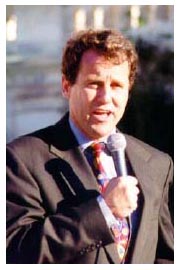
Senators-elect Bernie Sanders, Jim Webb, Sherrod Brown, Claire McCaskill and John Tester.
Never happy with New York's two senators, for the last few years I've thought of Barbara Boxer and Patrick Leahy as my own two. But in addition to restoring my faith in the Republic, this fall brought a crop of tough, no-nonsense, populist progressives to the U.S. Senate. Any one of them alone would be enough to celebrate.
Sure, some may turn out to be disappointments, but for the first time in my adult life, candidates that I love won.
Three More People You Should Try to Meet in Heaven* (2006 ed.)
Best Unexpected Side-Effect of Attending the Michigan-Vandy Game
Accompanying a five-month-old baby to her first college football game. Because there's nothing like watching LaMarr Woodley flatten some prissy Southern- awwwwwww...
If you've never experienced it, going to a game with 110,000 of your best friends and enjoying four hours of pageantry and ass-kicking is a pretty visceral experience, and - awwwwwwww...
Best Use of Numbers
Michigan 47, Notre Dame 21.
Worst Unexpected Side-Effect of Whupping Notre Dame
Getting so drunk that you believe you're in Ann Arbor even though you're in a bar on Second Avenue. Hectoring friends about how you want to go hang out in a dorm that nobody liked in the first place, and then licking their faces when they decline.
Waking up the next day surprised that you managed to walk home without getting in a fight or getting arrested.
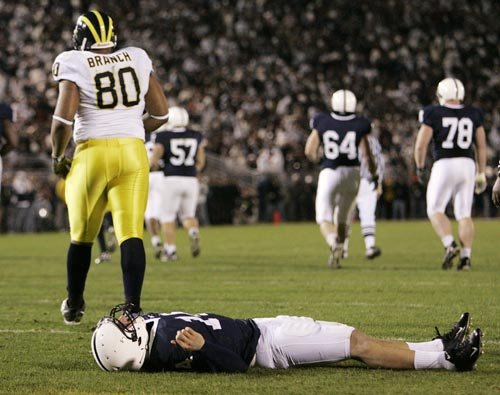
Best Sports Photo of 2006
Best Way to Work Through the Pain of Losing to Ohio State
Hold a ladies' arm-wrestling tournament in the kitchen.
High-Concept Posting Series that Failed: Excitable Young New Yorker. I entertained myself, but confused and/or pissed off the rest of you. A pompous, vulgar, needy, self-absorbed, moderately racist, clumsy, overemotional twentysomething? Yeah, I guess she wasn't as far-fetched as I thought. Sorry for the confusion.
Anticipated Fanboy Political Crush of 2007: Al Gore.
Mea Culpa: Duke Lacrosse. Yeah, I was pretty wrong. I guess I should have learned by now always to assume the worst of people in power. Is it possible that I should be even more cynical?
Most Surprisingly Successful Experiment with Live-Blogging: Hoot!
Best Trend in Late-Night Noisemaking
Hooting. Elegant in its simplicity, a little rooftop hooting cleans the soul. With a beer in hand, look up at surrounding towers and unloose a long, steady, "Hoot!"
Awesome.
Best Trend in Late-Night Aggression
Tie: head-butting; face-licking.
Second place: headlock.
Third place: punching in the forearm.
Best Excuse to Hold an Impromptu College Reunion
Turning 30.
For an immature asshole, I get to have a lot of friends.
I was assigned to read The Aeneid twice in college, and I read it both times. It seems like The Aeneid is the only epic poem that anybody likes and remembers. Nobody stays up late reading Homer.
On Virgil days the professors were in top form. A frat guy I was friends with wrote a play using Aeneas as a main character. Like the Inferno and Gatsby and As I Lay Dying, The Aeneid was one of those books that everybody seemed to like.
Comic book synopsis: Aeneas was a Trojan warrior who made his debut in The Iliad. About 800 years later, Virgil writes a sequel about how Aeneas founds the Roman empire. After the fall of Troy, Aeneas and has crew knock around the Mediterranean. They spend some time in Carthage, where Dido falls in love with him, and then kills herself when Aeneas leaves for Italy. Aeneas travels to the afterlife to talk to his dad and hear some prophecies. Then, Aeneas, his son Ascanius, and surviving crewmembers land on the western shore of Italy. They fight a bloody war with the locals, Aeneas kills his arch-rival, and the stage is set for the Roman empire. The end.
Aeneas is a great guy, much more vivid and real than what Homer cooked up. He works hard. He's a family man -- a good dad to Ascanius, and during the fall of Troy, he carries his own dad on his back until they get to safety. He's also a great friend: he was about to let his enemy Turnus live, when he remembered how Turnus killed his buddy Pallas: "Decked in the spoils you stripped from the one I loved -- escape my clutches?" Aeneas says. "Never -- Pallas strikes this blow, Pallas sacrifices you now, makes you pay the price with your own guilty blood!"
Aeneas was the first action hero, and all-around awesome.
I reread The Aeneid over Thanksgiving. I hadn't read it since fall of '98, and the new translation was a good excuse.
One thing I forgot: Dido was a lunatic. She was the queen of Carthage and a stone fox, what Elizabeth I would have been if she'd looked like Pam Anderson and Tommy Lee were a Trojan. Aeneas and his team are on the way to Italy when their ships land at Carthage. "His looks, his words, they pierce her heart and cling -- no peace, no rest for her body, love will give her none." After a few days: "Dido cares no more for appearances, nor for her reputation, either. She no longer thinks to keep the affair a secret, no, she calls it a marriage, using the word to cloak her sense of guilt."
Still, Aeneas needs to go found Rome. The gods feel worried, so they remind him not to hang out in Carthage too long. Aeneas doesn't tell her this yet, but Dido still goes crazy. "You're running away -- from me?" she says. "Thanks to you, my sense of honor is gone, my one and only pathway to the stars." She complains to Aeneas that, "thanks to you, the African tribes, Numidian warlords, hate me."
To be clear: Aeneas has done nothing wrong. His hometown has been destroyed and he's been at sea for years. He didn't lie to Dido. She looked at him, flipped out, then accosted him until he banged her. The whole relationship is summarized in The Hold Steady line, "Guys go for looks. Girls go for status." Aeneas explains to her that he's responsible for his son and his people, and that he'd love to stay in Carthage with Dido. Her measured response: "She breaks off in the midst of outbursts, desperate, flinging herself from the light of day, sweeping out of his sight, leaving him numb with doubt, with much to fear and much he means to say."
What does Dido do next? I bet you don't remember all of the details. She tells her sister Anna to build a fire, and tells Anna to burn all of Aeneas' clothes. After that, burn her bed! "I must obliterate every trace of the man, the curse, and the priestess shows the way!" says Dido, shrieking her psychotic little heart out.
Shortly thereafter, Dido throws herself on one of Aeneas' old swords. She dies screeching.
You may think that I'm being too tough on Dido. I mean, I wish that was the case. I wish that she had redeeming qualities. But in Book Six, when Aeneas goes to the underworld, he runs into Dido. He sees her and feels terrible. He says a bunch of nice things and says that he feels bad that she died.
Imagine that you're a dead Carthaginian queen, and that you killed yourself because you lack self control and perspective. Now you're dead. The underworld is boring. Wouldn't you be excited for any company, let alone this guy you were, like, totally in love with?
No. After Aeneas says all of this great stuff, she refuses to speak to him. She glares, looks at the ground, and walks away.
I know this is not a fashionable spin on Dido's behavior. I remembered Dido as this really hot, sad queen that got shafted by Aeneas. That's probably how my professors taught the book. But that is not Dido, who was, in reality, the precursor to Coral from the Real World-Road Rules challenges.
How the hell could you not like The Aeneid? I just described 1 1/2 chapters of a 12-chapter book. Elsewhere in the poem, Euryalus and Nisus become the charter members of NAMBLA, Aeneas explains the Trojan Horse from the Trojan perspective, everybody badmouths Odysseus, and Virgil provides pages of splattered brains and split skulls.
And then Virgil throws in all the right details, like his sketch of the battlefield death of "Menoetes who, in his youth, detested war but war would be his fate. An Arcadian angler skilled at working the rivers of Lerna stocked with fish, his lodgings poor, a stranger to all the gifts of the great, and his father farmed his crops on rented land." And then you think to yourself, Shit, Aeneas is in this for the glory, but a guy like Menoetes, who only wanted to fish in his stream and lead a simple life, is the one who pays for it.
Either in high school or junior high, one of my English classes was assigned to read John Knowles's A Separate Peace. Set at an elite private boys' school on the eve of World War II, it was maybe a poor curriculum choice for a primarily rural school district in the Upper Midwest. The popularity of Skoal and Brooks & Dunn might have been a signal that James Dickey's Deliverance or anything about the Snopeses would have gone over better. Not for the last time, I adopted the reverse-snobbery of my classmates, who had little interest in a moral novel about friendship between elite prep school kids. I've stayed skeptical of this particular coming-of-age genre.
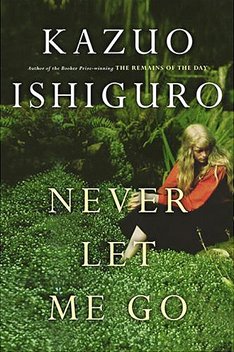
But that was more than a decade ago, and on Sunday, I spent my day reading Kazuo Ishiguro's Never Let Me Go, another story about the morality of a group of kids at an elite prep school, but one with a chillier heart and big ideas in mind. It's clear from the book's first pages that something is askew. The narrator, Kathy H., is a nurse of unspecified expertise, looking back on her education at a school called Halisham. After vague preliminaries about Kath's unusually long professional tenure, she describes a day from pre-adolescence, in which she and her friend Ruth watch a classmate named Tommy lose his temper in a soccer game.
This is a book about Halisham, and a love story about Kathy, Ruth and Tommy. Ishiguro hints that something is wrong with their world -- from Kathy's vague allusions about undefined carers and donors, and her oddly detached narrative voice. There is plenty of emotional repression, yes, but something larger is at work, and only as the story unfolds does its tragedy incrementally become clearer. A novel about moments that haunt you when you're young expands into bigger themes, about science and love and art and free will.
Some reviewers have described the book as science fiction and others as a cautionary tale, and though I don't think either label gets the job done, they'll do for the sake of allusion. But unlike many reviewers, I don't think of the book as a genre piece, or anything close to pulp. Its views about science are to be taken seriously, but I agree with Michiko Kakutani's description of the book as fundamentally "an oblique and elegiac meditation on mortality and lost innocence: a portrait of adolescence as that hinge moment in life when self-knowledge brings intimations of one's destiny, when the shedding of childhood dreams can lead to disillusionment, rebellion, newfound resolve or an ambivalent acceptance of a preordained fate."
Conservative commentors seem to view the book as a warning against unrestrained science. This is a plausible interpretation, but it didn't occur to me as I read it. Instead, I viewed it as having E.M. Forster's soul in Alduous Huxley's body. In much the way that the mafia setting of The Sopranos crystallizes family conflicts that would otherwise seem routine, the genre undertones of Never Let Me Go permit Ishiguro to shed shopworn adolescent baggage and focus his narrative on what matters.
I don't want to say any more about the plot than that. I came into this book without any background -- no Amazon reviews or professional reviews -- and it's best experienced that way. My lack of preparation allowed me to learn about the characters' world alongside them. If I'd known more, I might have loved this book less. I read all 290 pages in a day, staying up until 3 a.m. to finish, at which point I re-read the first chapter and responded in a way appropriate to a five-year-old who's watching Bambi for the first time: a blubbering baby breakdown.
Time Magazine selected Never Let Me Go as one of the 100 best English-language novels since 1923, which sounds about right. In story, narration, and clarity, the book stands on par with Ian McEwan's Atonement. Between McEwan, Ishiguro and Zadie Smith, the Brits are teaching their American counterparts some knockout lessons in how to write a novel. Why the U.S. hasn't yet produced a young-ish writer in the caliber of Smith and Ishiguro, I'll think about some other time.
Cole Slaw Blog is maintained by two grown adults who have been known to order Georgia Reubens. For lovin' or bile, contact us at coleslawblog (at) gmail.